
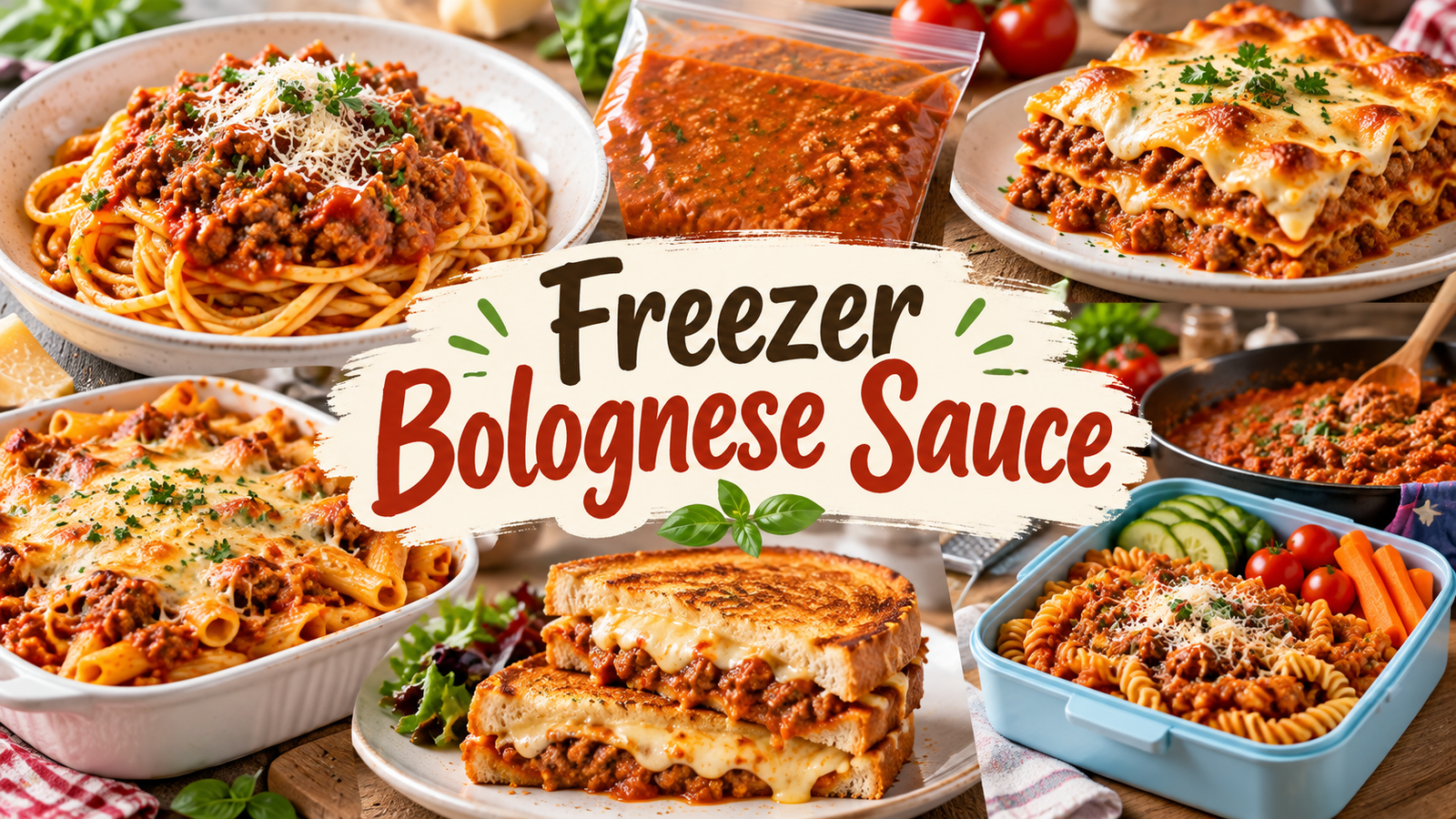
Irresistible Freezer Bolognese Sauce: 7 Easy Steps for Stress-Free School Weeks
Some recipes are useful for one meal. Others make the rest of the week easier.
This freezer Bolognese sauce belongs in the second category.
I like preparing a generous batch because it can become so many different meals later: pasta Bolognese, lasagna, gratin, croque monsieur, or even a quick lunchbox pasta when the week gets busy.
The key is not rushing the meat or the sauce. I let the ground beef brown properly first, then cook everything slowly over low heat until the tomatoes reduce into a rich, thick sauce.
Once it is cool, I divide it into portions and freeze it.
One cooking session, several future meals.
Why I Always Keep Bolognese Sauce in the Freezer
A homemade sauce like this gives you a ready-made base instead of starting dinner from zero every time.
You can use it for:
- spaghetti or other pasta
- lasagna
- baked pasta or gratin
- croque monsieur
- quick family dinners
- school-lunch pasta dishes
What I especially like is that the sauce already contains meat, vegetables, tomatoes, herbs, and seasoning.
That means most of the flavor is already done before you even decide what meal you are going to make.
Ingredients

A Note About the Tomatoes
For this recipe, I use approximately 1 kg of cherry tomatoes.
I like them in Bolognese because they give the sauce a pleasant natural flavor. I blend them with their skins instead of peeling them first, which also keeps the preparation simple.
How to Make Freezer Bolognese Sauce


1. Heat the Pot Well
Start with a large pot or deep pan.
Let it become properly hot before adding a little cooking oil.
Then add the 750 g of ground meat.
One important detail: do not immediately start stirring it constantly.
Give the meat some time to make contact with the hot pan and brown.
That browned surface adds much more flavor than simply steaming the meat.
2. Brown the Ground Meat
Allow the meat to develop some color before breaking it apart and stirring.
Continue cooking until the ground meat is nicely browned.
This is one of the small steps that makes a noticeable difference in the finished Bolognese sauce.
The goal is to get a deeper, slightly roasted flavor before adding the vegetables.
3. Add the Onion, Carrots, and Celery
Once the meat is browned, add:
- 1 large onion
- 2 grated carrots
- 2 tablespoons celery
Mix everything together.
The carrots bring a gentle natural sweetness, while the onion and celery build the savory base of the sauce.
And yes—celery matters here.
It gives Bolognese a different flavor from using only onion and herbs.
4. Add the Seasonings
Now add:
- about 1 tablespoon olive oil
- salt to taste
- 1 tablespoon butter
- 1 small teaspoon black pepper
- 4 grated garlic cloves
Mix everything well so the seasonings coat the meat and vegetables.
The butter is a small addition, but it helps give the sauce a richer finish.
5. Add Basil and Bay Leaves
If you have fresh basil available, add a few leaves.
Then add 2 bay leaves.
Mix again.
These herbs slowly perfume the sauce while it cooks, so there is no need to overload the pot with lots of different seasonings.
The meat, vegetables, tomatoes, basil, and bay leaves are enough to create a flavorful base.
6. Blend the Cherry Tomatoes
Wash approximately 1 kg cherry tomatoes.
Blend them whole, including the skins.
Then pour the blended tomatoes directly into the pot.
Stir everything together until the tomato mixture is evenly combined with the ground meat and vegetables.
At this point, the sauce may still look fairly loose.
That is normal.
The next step is where the texture really develops.
7. Cook Low and Slow
This is the real secret of the recipe.
Do not try to finish the sauce quickly over high heat.
Let the freezer Bolognese sauce simmer gently over low heat for a longer period, stirring occasionally.
As it cooks, the tomatoes reduce and the flavors become more concentrated.
You are looking for a sauce that becomes noticeably thicker rather than watery.
Once the Bolognese has reduced and reached the consistency you like, remove it from the heat.
Let It Cool Before Freezing
Do not pack the sauce while it is still piping hot.
Allow it to cool first.
Then divide the Bolognese into smaller freezer portions.
I prefer portioning it rather than freezing everything together because I can later defrost exactly what I need.
A small portion might be enough for pasta.
A larger portion can become lasagna or gratin.
That is what makes this recipe especially practical.
My Favorite Ways to Use It
Pasta Bolognese
Probably the fastest option.
Cook pasta, warm the sauce, combine the two, and dinner is almost done.
Lasagna
Instead of preparing meat sauce from scratch on lasagna day, use one of your freezer portions.
Pasta Gratin
Combine pasta, Bolognese sauce, and your preferred cheese before baking.
Croque Monsieur
A little Bolognese can turn a simple toasted sandwich into something much more filling.
School Lunch Pasta
If your child’s lunch setup allows it, use a small portion with pasta for a warm lunch.
The sauce can also help you vary pasta lunches without preparing a completely new recipe each time.
Why Portioning Matters
One large frozen container sounds convenient until you only need enough sauce for two portions of pasta.
That is why I prefer dividing the sauce before freezing.
For example, you can prepare:
Small portions for quick pasta meals.
Medium portions for family dinners.
Larger portions for dishes such as lasagna or gratin.
It is a small organization step that makes the freezer much more useful later.
Estimated Calories
Because some quantities—especially the initial cooking oil and salt—are not precisely measured, this should be treated as an estimate, not an exact nutrition calculation.
Using approximately:
- 750 g ground meat
- 1 kg cherry tomatoes
- 2 carrots
- 1 large onion
- 1 tablespoon olive oil
- 1 tablespoon butter
the complete batch would roughly contain 2,300–2,700 calories, depending mainly on the fat content of the meat.
If divided into:

These numbers represent the Bolognese sauce only, without pasta, cheese, bread, or other accompaniments.
Small Details That Make the Sauce Better
Let the Meat Brown First
If you stir immediately and constantly, the meat releases moisture and can cook without developing much color.
Giving it time against the hot pan creates more flavor.
Grate the Carrots
Grated carrots blend naturally into the sauce instead of leaving large vegetable pieces.
That also makes the finished texture easier to use in different recipes.
Do Not Rush the Tomato Sauce
Long, gentle cooking is much more important here than adding lots of extra ingredients.
Let the tomato mixture reduce slowly.
Freeze in Useful Portions
Think about how you usually cook before choosing container sizes.
A portion for pasta does not need to be the same size as one for lasagna.
Freezer Bolognese Sauce FAQ
Can I prepare Freezer Bolognese Sauce ahead of time?
Yes. Freezer Bolognese Sauce is ideal for meal prep. Prepare a larger batch, let it cool completely, divide it into useful portions, and freeze it for future pasta, lasagna, gratin, or lunchbox meals.
Why should I brown the meat for Freezer Bolognese Sauce?
Browning the ground meat first gives your Freezer Bolognese Sauce a deeper, richer flavor. Let the meat develop some color before stirring too much, then add the vegetables and seasonings.
Do I need fresh basil in Freezer Bolognese Sauce?
No. Fresh basil is optional. Your Freezer Bolognese Sauce will still have plenty of flavor from the meat, onion, carrots, celery, garlic, tomatoes, black pepper, and bay leaves.
Can I make a large batch of Freezer Bolognese Sauce?
Yes. Making a large batch of Freezer Bolognese Sauce is one of the easiest ways to prepare several future meals at once. Freeze it in small, medium, or large portions depending on whether you plan to use it for pasta, lasagna, gratin, or another family meal.
How can I use Freezer Bolognese Sauce after freezing?
Once reheated, Freezer Bolognese Sauce can be used with spaghetti, baked pasta, lasagna, croque monsieur, or school-lunch pasta dishes. Keeping several portions in the freezer gives you an easy base for different meals throughout the week.
Final Thoughts
A freezer becomes much more useful when it contains ingredients that can turn into several different meals.
That is why I keep coming back to this freezer Bolognese sauce.
You cook the meat properly once, add the vegetables and tomatoes, let everything simmer slowly, then store it in practical portions.
Later, that same sauce can become pasta one day, lasagna another day, and a completely different meal after that.
For busy school weeks, having one reliable base ready in the freezer can save much more time than preparing every meal from scratch.
If you enjoy easy make-ahead meals like this, you may also like my Meatballs in Tomato Sauce — another family-friendly recipe that works beautifully for lunchboxes and quick dinners.
And if you want more lunchbox ideas, step-by-step recipes, and simple meal-prep inspiration, follow Lunchbox Bloom on Facebook. I share new recipes, videos, and practical school-lunch ideas regularly. ❤️
And in the next recipe from this lunchbox idea, we are moving on to the salad. If you want to see how the Bolognese, salad, and tiramisu bread bites come together in one complete meal, check out my School Lunchbox Idea #4